Amigos Isla del Coco presents progress in managing the Coco Marine Conservation Area at COLACMAR 2026
-
With four oral presentations and a scientific poster, Faico shared in Panama City the results of protection and research efforts in the ACMC at the region’s leading marine science congress.
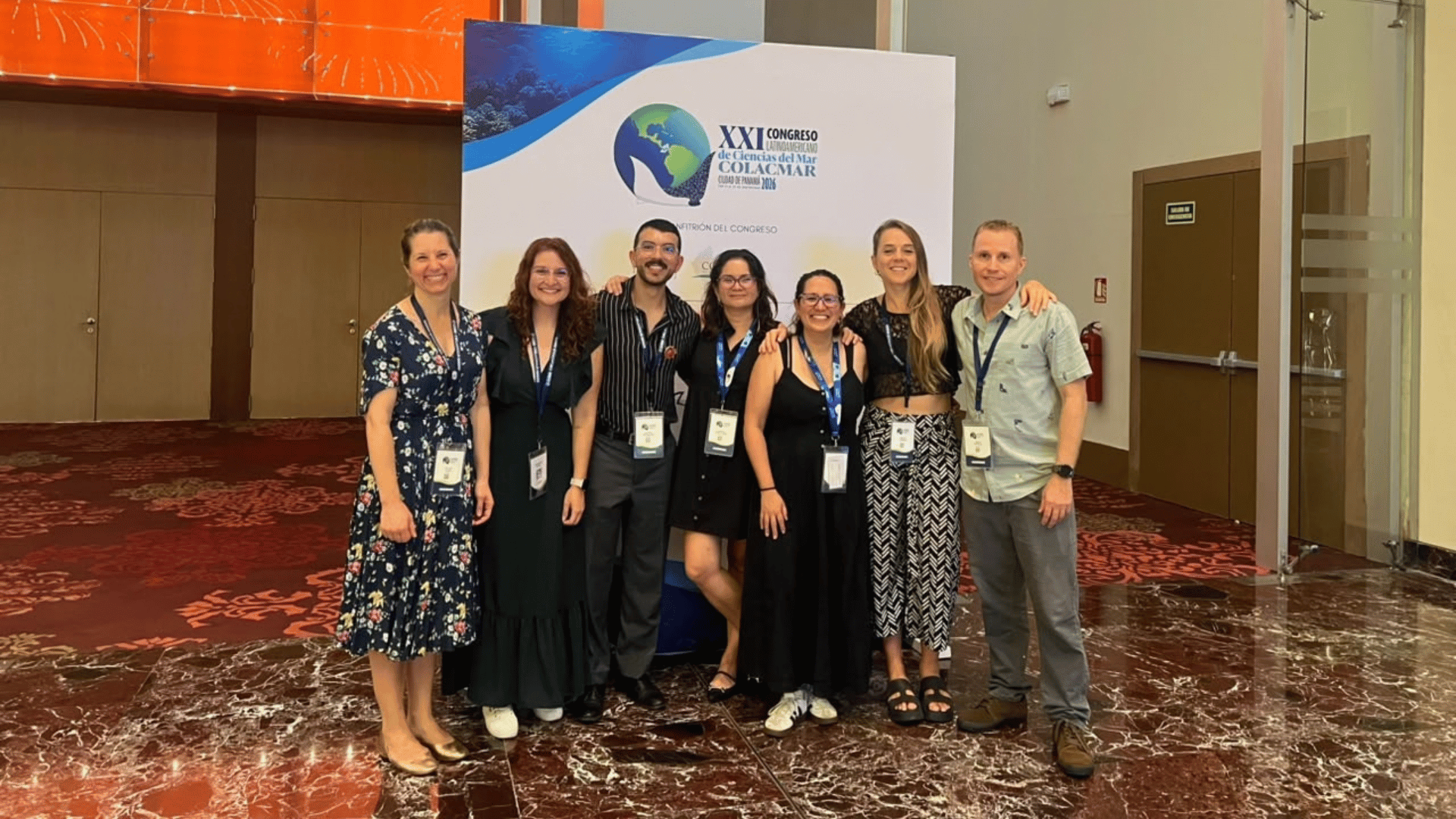
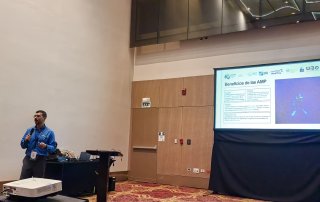
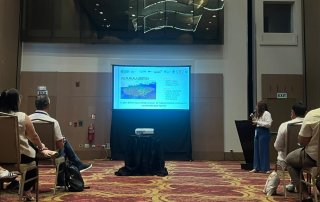
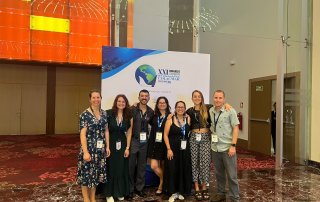
Amigos Isla del Coco (Faico) took part in the Latin American Congress of Marine Sciences (COLACMAR), held September 21-25 at the Hotel Megápolis Convention Center in Panama City. It gave four presentations and a scientific poster on management and research in the Coco Marine Conservation Area (ACMC). COLACMAR is the biennial flagship marine science gathering in the Americas. It brings together professionals, researchers, students, and institutions from Latin America and the Caribbean dedicated to the study and conservation of the sea. This edition offered nearly 50 sessions, including thematic symposia, keynote lectures, and specialized workshops.
Faico’s participation is part of the project “Marine Conservation and Sustainable Coastal Development between the Central Pacific Coastline and the Coco Marine Conservation Area (ACMC) in Costa Rica.” The initiative seeks to increase the effectiveness and coverage of Marine Protected Areas in order to strengthen the resilience of marine resources and improve livelihoods along Costa Rica’s Pacific coast.
One of the most talked-about presentations explained the process of expanding marine protection. Since 2021, Isla del Coco National Park has grown from 11,683 km² to 54,844 km², and the Bicentennial Marine Management Area, covering 106,285 km², was created. As a result, the country reached 30% of its Exclusive Economic Zone under protection. Before the expansion, only 9 of the 85 seamounts over 1,000 meters and 8 of the 342 knolls under 1,000 meters were protected, despite being highly productive sites and aggregation areas for threatened species such as the scalloped hammerhead shark (Sphyrna lewini). The proposal was built using scientific modeling, minimum socioeconomic cost criteria, and a four-stage consultation with 1,980 participants and a 90% approval rate. It now protects 49% of the Coco Submarine Volcanic Ridge and generates annual benefits of over USD 40 million from tourism and sport and tourism fishing.
Faico also presented the results of implementing the ACMC Prevention, Protection, and Control Plan. The initial assessment yielded a Threat Management Index of just 17%, rated unsatisfactory, and identified 12 main threats, including illegal, unreported, and unregulated fishing, invasive species, lack of resources, and weak governance. The plan, developed through a participatory process, includes 10 strategies and 27 activities with targets and indicators. At the end of its first year of implementation, in 2025, it had reached 65.5% progress. Its achievements include the installation of a radar in Isla del Coco National Park, the renovation of the Monitoring, Control, and Surveillance Center, technical training, and joint operations, which have contributed to a reduction of more than 90% in apparent fishing effort in the park.
Another presentation described the development and implementation of the ACMC Climate Change Mitigation and Adaptation and Risk Management Plan. The plan began with an assessment of risks and vulnerabilities and resulted in five adaptation and mitigation measures, whose progress was presented. The importance of connecting the various research efforts carried out in the area so that they contribute to this plan was also highlighted.
The fourth presentation focused on biosecurity and invasive species, both marine and terrestrial, in Isla del Coco National Park. It covered the main pathways of introduction, monitoring techniques (such as targeted searches and settlement plates), and capacity building through species identification, infrastructure, exchanges of experience, and national and regional workshops. The work is supported by experts from Jocotoco, the Charles Darwin Foundation, the Smithsonian Environmental Research Center (SERC), and the Galápagos Biosecurity and Quarantine Regulation and Control Agency (ABG).
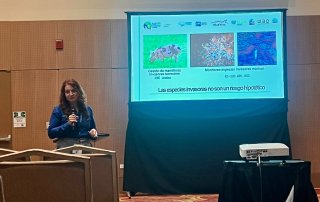
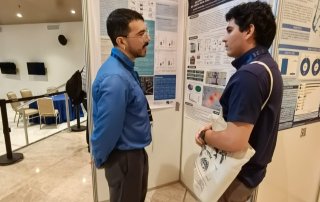
In the poster session, Faico presented a study on the ecotoxicological effects of microplastic ingestion in the giant river prawn Macrobrachium rosenbergii, a species found on Isla del Coco. The results showed that rPET particles are significantly more toxic than synthetic fibers. At a concentration of 1,000 microplastics per liter, they halved the growth rate after eight days and caused 73.3% mortality after 15 days, along with digestive alterations, oxidative stress, and dysbiosis of the gut microbiota. The findings provide input for estimating the risks these pollutants pose to the food chain, including humans.
“COLACMAR brings together students, researchers, non-governmental organizations, and other stakeholders from different countries involved in marine research and conservation. For Faico, taking part was a key opportunity to make ourselves known and showcase the progress of the Coco Marine Conservation Area in managing its protected areas, work that the foundation has supported as a strategic ally for more than 30 years,” said Debbie López-Núñez, Marine Science Officer at Amigos Isla del Coco.
For his part, Gabriel Rodríguez Castillo, Projects Manager at Faico, noted:
“This congress, which brings together countries from Latin America and other continents, enriches the knowledge and management of participants at their intervention sites through talks, discussions, scientific posters, and networking spaces. Each person arrives with a different vision or approach, and exchanging them is extremely important.”
“Although this is a science-focused congress, Faico’s contribution to the ACMC’s protected wilderness areas has highlighted the importance of working hand in hand with the authorities responsible for managing these sites and with decision-makers. Thanks to our participation in this forum, we have seen and recognized our ability to work alongside some of the best experts in the world, translating science into management, coordination, and implementation,” he added.
With this participation, Faico reaffirms its commitment to the conservation of Isla del Coco and to the exchange of knowledge among the countries of the region.
Amigos Isla del Coco thanks the Coco Marine Conservation Area for the collaboration that made it possible to advance the conservation objectives and share its results in technical forums such as COLACMAR. It also thanks the Blue Action Fund (BAF), whose funding made the project’s implementation and results possible; Marviva, the implementing organization; and its partners, the Center for Research in Marine Sciences and Limnology (CIMAR) at the University of Costa Rica and the University of Western Brittany.