Fossils of the Unknown Costa Rica: The Ocean Floor
By: María Isabel Sandoval
Micropaleontologist, University of Costa Rica
A few weeks ago, the scientific journal Nature published the discovery of a fossil graveyard on the floor of the Indian Ocean, approximately 5 million years old. The site contains the remains of hundreds of beaked whales, a group of cetaceans characterized by diving to great depths. The site is currently located more than 4,000 meters below the sea surface and extends for about 1,200 kilometers.
When a whale dies, its body sinks to the seafloor. Once there, its remains can become a true oasis of life for other organisms and, under certain conditions, its bones can fossilize and be preserved for millions of years.
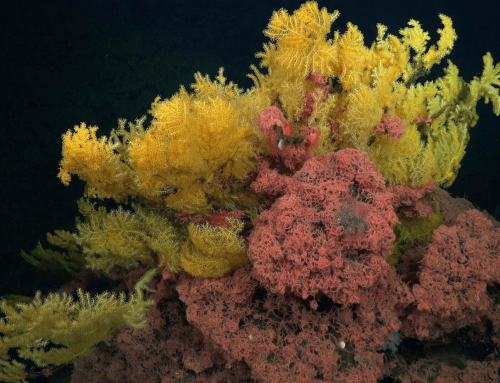
Beaked whales are difficult to observe because of their deep-water lifestyle, so their fossil remains are also rarely seen. However, exploring deeper parts of the ocean makes it possible to uncover new evidence that helps reconstruct the history of these little-known environments. This evidence includes macrofossils, such as the remains of large vertebrates, and microfossils, whose tiny remains are preserved in the sediments and rocks of the seafloor.
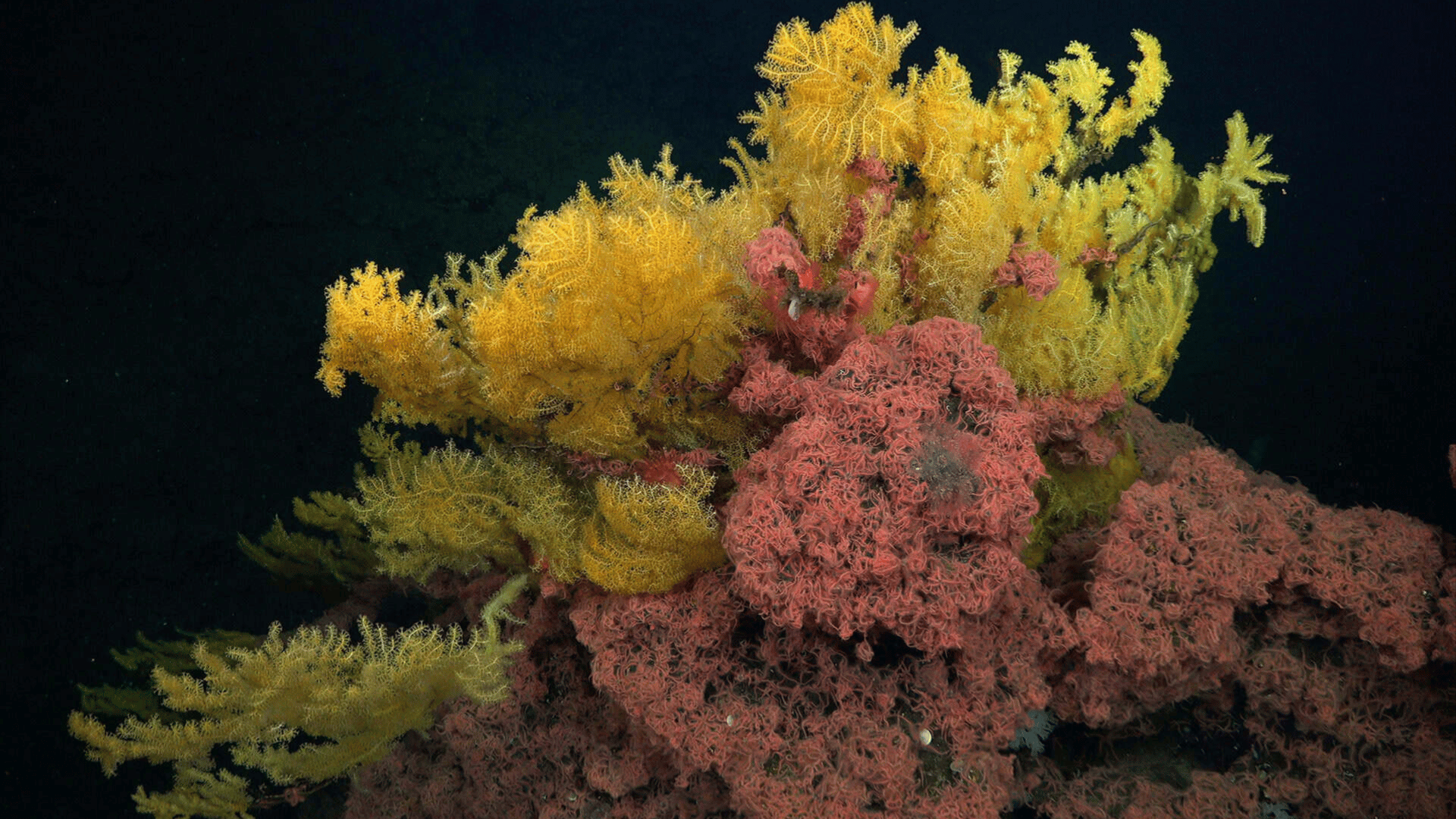
Although this discovery took place far from Costa Rica, the story it tells is not foreign to us. During a scientific expedition aboard the R/V Falkor (too), in the Pacific waters of our country, we found fossils of beaked whales several million years old on the tops of some seamounts. We also collected rocks and sediments containing fossil microorganisms, including diatoms, radiolarians, and foraminifera.
Some species of these organisms lived during specific geological periods and were widely distributed throughout the oceans. For this reason, their presence in a rock or sediment can help us determine its age. It is as if each species left a small “time stamp” on the ocean floor.
This type of study is known as biostratigraphy. This discipline uses the distribution and evolution of fossils to establish the relative age of sediments and rocks. In this way, fossils become tools that allow us to reconstruct the geological history of a region and relate it to events that occurred on a global scale.
The ocean floors may seem like static, isolated places, but in reality they preserve an extraordinary record of Earth’s history. Every whale bone, every microfossil, and every stratum, or layer of sediment, can provide a key piece to understanding how the oceans have changed over millions of years.
From a geological standpoint, knowing the ocean floor is fundamental to interpreting how the planet works. Marine environments are closely linked to geological processes that have shaped their characteristics over time and that, in turn, have conditioned the development of life. Studying the deep sea is, therefore, studying an essential part of Costa Rica and of the history of the planet we inhabit.