-
Improvements were carried out at the Monitoring, Control, and Surveillance Center of the National Coast Guard Service and the Monitoring, Control, and Surveillance Center of INCOPESCA.
Costa Rica, March 25, 2026. With the aim of reinforcing the protection of marine ecosystems and preventing, deterring, and eliminating threats such as illegal, unreported, and unregulated (IUU) fishing, Costa Rica is strengthening its monitoring, control, and surveillance (MCS) capacities through specialized equipment and infrastructure upgrades at key operational centers across the country.
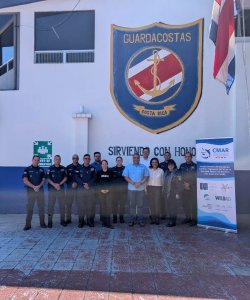
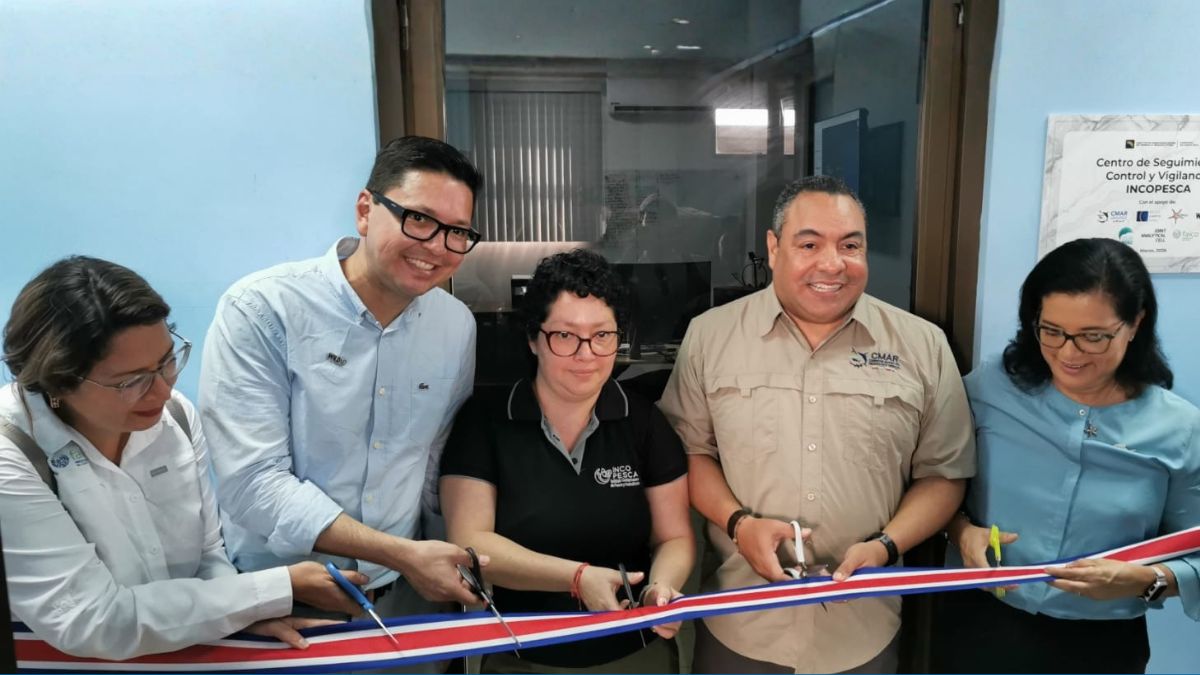
These actions took place on March 24 and 25 במסגרת the project “Strengthening Monitoring, Control, and Surveillance in the Eastern Tropical Pacific Marine Corridor (CMAR),” and included improvements to the Monitoring, Control, and Surveillance Center of the National Coast Guard Service (SNG) and the Monitoring, Control, and Surveillance Center of the Costa Rican Fisheries and Aquaculture Institute (INCOPESCA).
The project is funded by the Bezos Earth Fund and implemented by Fundación Pacífico, in partnership with WildAid, JAC, and OceanMind, and in alliance with Amigos de la Isla del Coco (Faico).
During the visit, authorities and representatives from national and international organizations agreed that this progress represents a strategic step toward more efficient, coordinated, and evidence-based management for ocean protection.
The Executive Secretary of the Eastern Tropical Pacific Marine Corridor (CMAR), Jair Urriola, highlighted that these actions contribute to strengthening regional cooperation in marine surveillance.
Meanwhile, Zuleika Pinzón, Project Coordinator at Fundación Pacífico, explained that this initiative is part of a broader effort to enhance marine monitoring, control, and surveillance systems in CMAR member countries through specialized training, process standardization, improved coordination among national stakeholders, strengthened regional policies, and upgrades in infrastructure and equipment for key operational centers.
Alonso Fraire, Project Manager at WildAid, emphasized that having better equipped and more coordinated centers enables a more effective response to growing threats to marine ecosystems—especially illegal, unreported, and unregulated (IUU) fishing, one of the main pressures on ocean biodiversity and the sustainability of responsible fisheries and coastal communities.
One of the most significant advancements will be seen at the Monitoring, Control, and Surveillance Center of the National Coast Guard Service, where new capabilities will support information management, knowledge generation, and intelligence analysis to develop predictive models and anticipate risks.
Participants in the session included authorities from the National Coast Guard Service, among them Commander Mauricio Mora, Head of Operations; Commander Manuel Arias, Legal Advisor; and Commander Carmen Castro, Head of the Environmental Unit.
“When data speaks, security can anticipate,” stated Commander Carmen Castro, adding that these tools align with the country’s security policy and policing model, enhancing response capacity to illicit activities at sea.
The activities also included representatives from INCOPESCA, the Coco Marine Conservation Area (ACMC-SINAC), the National Coast Guard Service, members of the CMAR Regional Technical Committee, and partner organizations, including Faico.
Through these actions, CMAR, Fundación Pacífico, WildAid, and their partners reaffirm their commitment to strengthening national capacities and regional cooperation for more effective, coordinated, and sustainable marine management, for the benefit of Costa Rica and the broader CMAR region.